





Role of Artificial Intelligence in Banking
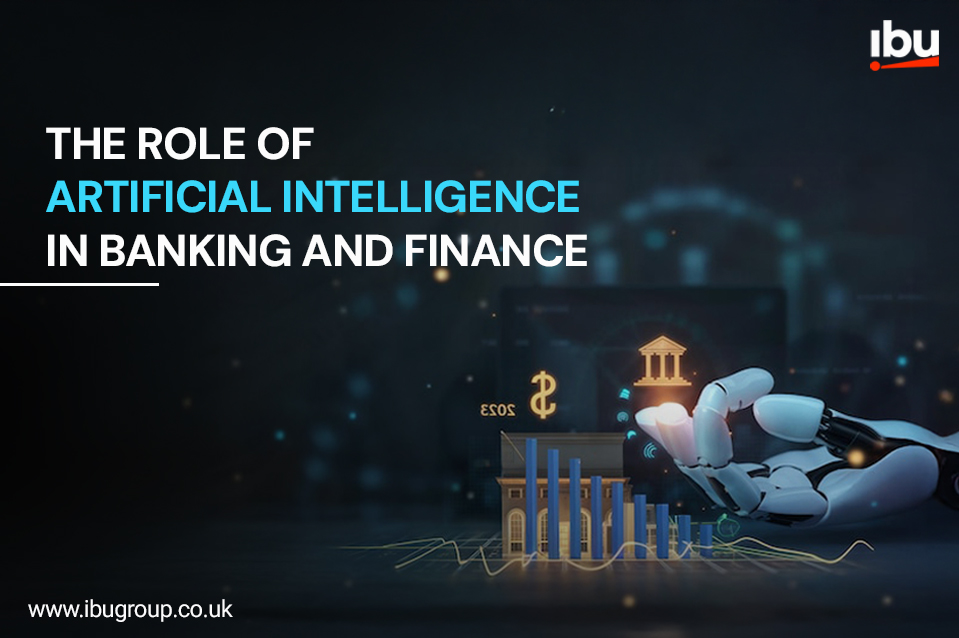
The role of artificial intelligence in banking is redefining how modern financial institutions operate today. The financial world is evolving faster than ever before. Artificial intelligence isn’t just automating routine tasks anymore it’s reshaping how banks and financial institutions make decisions, serve their customers, and stay competitive in a digital-first era. At IBU Group, we blend strategic consulting with cutting-edge technology to help BFSI organizations implement AI solutions that truly create value and drive measurable results not just theoretical promises.
Today, AI is becoming a practical tool that influences everyday banking operations, from customer onboarding to backend risk monitoring. What once took hours or even days can now be done in real time with greater accuracy and reliability. This shift is helping institutions move faster while maintaining trust and operational stability.
How AI Is Transforming the Banking Experience
Gone are the days when banking was slow, manual, and paper-heavy. AI has revolutionized operations, making them faster, smarter, and more reliable. Today, banks can approve loans in minutes, tailor digital services to individual customers, accurately assess credit risk, and spot fraud as soon as it happens. This shift is vital because modern consumers expect speed, transparency, and seamless convenience and AI empowers banks to deliver exactly that, consistently and accurately.
The Growing Role of AI in Accounting and Finance
While banking is undergoing a major transformation, AI is also changing accounting and finance teams in powerful ways. Tasks that once gobbled up hours like reconciling accounts, verifying data, and preparing reports are now streamlined by intelligent automation. At IBU Group, we help companies adopt financial tools that do more than just speed things up: they spot inconsistencies, prevent costly errors, and surface insights before small issues snowball. That lets finance professionals move past routine chores and focus on what really matters-analysis, forecasting, and strategic growth.
Real Benefits of the Role of Artificial Intelligence in Banking
AI is already making a tangible difference in finance and banking by enabling:
- Better fraud detection: AI watches millions of transactions in real-time, flagging suspicious activity instantly.
- Smarter forecasting: Predictive analytics give banks clearer foresight into cash flows, risks, and customer trends.
- Faster decisions: Automated insights empower teams to act swiftly and confidently.
- Scalable operations: Financial institutions grow without added manual work or ballooning overheads.
- Greater accuracy: AI reduces costly errors and boosts compliance, making reporting and risk management more transparent.
What’s Next for AI in the Financial World
AI is no longer an experiment in banking and finance; it’s becoming the backbone of how modern institutions operate. What we’re seeing today is only the beginning. Over the next few years, AI will drive hyper-personalized financial experiences, where every customer interaction feels intuitive, timely, and tailored. Banks are already testing voice-led services, real-time advisory tools, adaptive credit models, and intelligent assistants that understand customer behavior more accurately than traditional systems ever could.
But the next leap isn’t just about automation or personalization. It’s about proactive finance, systems that predict risks, detect fraud before it happens, recommend financial actions in real time, and guide customers toward better decisions without being prompted. As global regulations tighten and digital-first customers demand transparency, speed, and reliability, AI will help institutions stay compliant while delivering differentiated value. The future of finance will belong to organizations that combine advanced AI with strong governance, ethical guardrails, and a human-centric design. Those who get it right won’t just catch up to innovation, they’ll lead it.
The Foundation Behind Successful AI Adoption
AI may look magical from the outside, but the truth is simple: without the right foundation, it doesn’t work. Banks and financial institutions often rush into AI hoping for instant transformation, only to discover that poor data quality, siloed systems, and inconsistent processes can stall progress. AI thrives when the environment around it is structured, stable, and strategically aligned.
Successful AI adoption starts with clean, well-governed data that is reliable enough to support real-time decisions. It requires systems that can scale, teams that understand how to work with intelligent tools, and leadership that knows what outcomes they are driving toward. Without these fundamentals, even the most advanced models deliver incomplete insights, inconsistent outputs, or, worse decisions that expose institutions to operational or compliance risks. This is why the foundation matters. AI is not just a technology investment, it’s an organizational shift. When processes are well-defined, data flows seamlessly, and roles are aligned, AI becomes a natural extension of the business, not a disruptive force. It turns into a tool that enhances productivity, accuracy, and decision-making across every layer of the enterprise.
Building a Digital Backbone for the Future
At IBU Group, we believe that sustainable transformation begins with a strong digital backbone, one that supports AI, automation, and advanced analytics without compromising stability, security, or performance. Our approach is straightforward: we help businesses modernize the right way. That means upgrading legacy systems, strengthening data architecture, and designing workflows that make space for AI-led decision-making.
Instead of adopting technology for the sake of innovation, we help organizations implement solutions that directly improve efficiency, customer experience, compliance, and operational resilience. Our teams work across system modernization, platform engineering, digital advisory, and financial technology enablement, ensuring every component is aligned to a long-term vision.
A strong digital foundation does more than enable AI; it future-proofs the enterprise. It gives leaders the confidence to experiment, scale, and automate without creating operational risk. It empowers teams to work smarter, reduces manual dependency, and unlocks new opportunities for growth. At IBU, our goal is to connect digital transformation with real human capability, turning technology into a competitive advantage, not a challenge.
FAQs:
-
What role does AI play in banking?
AI speeds up processes, enhances fraud detection, supports risk analysis,facilitates customer support via chatbots, and automates tasks helping banks make better decisions.
-
How is AI used in accounting and finance?
AI automates data entry, reduces errors, improves forecasting, and enhances financial reporting by quickly analyzing large data sets.
-
Will AI replace jobs in banking and finance?
No. AImainly automates repetitive tasks. Human expertise remains critical for planning, decision-making, and strategy building.
-
Why is AI essential for BFSI?
AI improves accuracy, cuts operational costs, strengthens security, enhances customer experience, and keeps institutions competitive in digital markets.
-
Does AI help reduce fraud in banking?
Absolutely. AI monitors transactions in real time to catch suspicious patterns early, preventing major losses.