


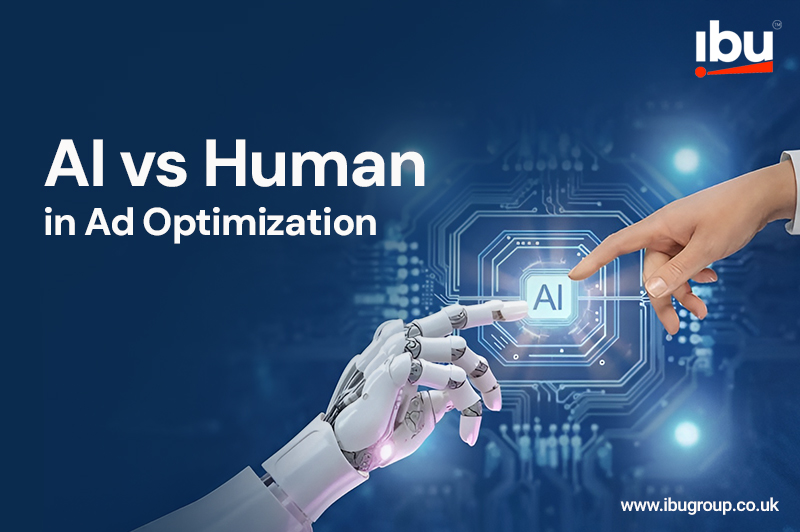
AI vs Human in Ad Optimization
AI vs Human in Ad Optimization: What Drives Performance
AI vs Human in Ad Optimization has become one of the most important conversations in digital advertising today. The industry is louder, faster, and more competitive than ever. Algorithms change overnight; customers jump across platforms unpredictably, and performance metrics keep Changing constantly.
But here’s the truth, a truth we see every day at IBU, where we help global brands transform how they scale, grow, and engage customers: there is no real competition between AI and humans. The strongest results appear when both work together.AI brings extraordinary speed, automation, and precision. Humans bring strategy, empathy, creativity, and a deep understanding of why people behave the way they do. And when these strengths merge, they create an optimization engine that is smarter, faster, and far more human than either could deliver alone. Let’s explore exactly why.
How AI Powers Modern Ad Optimization
AI is built for one thing: processing information faster and deeper than any human team ever could. In ad optimization, that gives AI an unmatched advantage. Its capabilities include:
- Real-time bidding adjustments across platforms
- Predictive modelling to identify high-intent users
- Automated testing of hundreds of creative variations
- Micro-segmentation using complex behavioural signals
- Instant performance insights and trend detection
This isn’t magic it’s math. And the speed at which AI tests, learns, and optimizes is exactly why global advertisers rely so heavily on AI-powered systems. But even with all this computational brilliance, AI still lacks something essential: emotional intelligence to understand people.
Speed alone doesn’t build a brand or spark trust. It doesn’t make someone pause mid-scroll and feel understood. While AI can move fast and optimize relentlessly, performance isn’t just about efficiency. The real difference lies in the human gap where emotion, understanding, and connection influence how people respond to advertising.
Where Human Intelligence Still Wins
Humans bring heartbeat into advertising. They understand intention, emotion, cultural nuance, and the psychological triggers that shape decisions. These are elements AI cannot fully interpret, not today, not in ten years. Human intuition works in ways data cannot fully capture. A strategist can instantly sense when a message feels off. A creator can feel when an idea emotionally resonates. A marketer can spot cultural shifts long before they show up in dashboards or reports. This instinctive understanding is why human judgment remains irreplaceable. This is why human judgment remains irreplaceable. It is context-driven, intuitive, and deeply connected to real human behavior.
At IBU, this human intelligence forms the backbone of every AI-supported optimization system we build. Our teams guide messaging, creative direction, and audience understanding ensuring AI doesn’t just optimize clicks, but for connection, loyalty, and long-term brand growth.
Human Strengths AI Can’t Replace
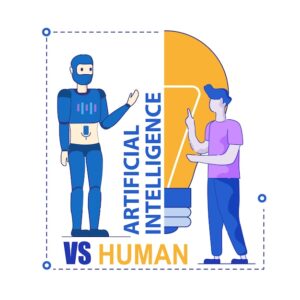
Human marketers stand out in areas where AI struggles, including:
- Emotional storytelling and creative direction
- Brand positioning and value-driven messaging
- Understanding cultural, regional, and psychological nuance
- Ethical decision-making and responsible targeting
- Cross-channel strategy and big-picture thinking
Even the smartest AI will optimize for the quickest win. But humans optimize meaning for customer experience, trust, and future impact. That’s why the most successful advertisers don’t replace human roles; they elevate them with AI.
Why AI vs Human in Ad Optimization Delivers Better Results
When AI and humans work together, optimization becomes more intelligent, more agile, and more aligned with customer expectations. AI vs Human in Ad Optimization handles the complexity of data, testing, segmentation, and prediction. Humans guide the intention of story, strategy, and emotional alignment.
This balance is exactly what we implement for global brands at IBU. We see firsthand how combining machine intelligence with human insight leads to stronger ROAS, faster learning cycles, more relevant ads, and deeper customer connections. The real breakthrough doesn’t come from choosing AI instead of humans. It comes from building a system where both strengthen each other with a system designed not only to perform but to adapt, resonate, and scale.

How to Combine AI and Human Expertise
Brands that achieve the strongest performance usually follow a simple but powerful hybrid model:
- Use AI for data processing, predictive modelling, automation, and rapid optimization
- Use humans for storytelling, strategy, creative interpretation, and brand alignment
- Create weekly learning loops between algorithm outputs and human insights
- Optimize all platforms together Google, Meta, LinkedIn, YouTube, programmatic
- Review not just performance metrics but emotional resonance and long-term impact
This hybrid structure transforms advertising from reactive to proactive from guesswork to guided intelligence.
Why One-Sided Approaches Fail
A fully automated system moves fast but without direction, it becomes generic. Ads lose personality and start blending into the feed. Everything looks the same. A fully human system, however, moves too slowly. Data volume is overwhelming, platform algorithms evolve daily, and competitive markets require real-time adjustments humans simply can’t execute at scale. This is why the modern advertising landscape demands a balance. AI brings efficiency. Humans bring meaning. One without the other creates a gap that directly impacts performance and customer experience.
Why Balance Is the Future of Ad Optimization
A fully automated advertising system moves fast, but without human direction it becomes generic. Ads lose personality, blend into the feed, and start looking the same. Efficiency increases, but relevance and impact decline. On the other hand, a fully human-led approach struggles to keep pace. Data volumes are overwhelming, platform algorithms evolve daily, and competitive markets demand real-time optimisation that humans alone simply can’t execute at scale. In marketing and Artificial Intelligence, human intuition and creativity remain essential, but without automation and data-driven systems, even strong ideas lose momentum. This is where one-sided strategies fail. The modern advertising landscape doesn’t need extremes; it needs balance.
AI brings speed, scale, and precision, while humans bring context, creativity, and brand meaning. When one operates without the other, a gap forms that directly affects performance, relevance, and customer experience. Looking ahead, the future of ad optimisation won’t be AI replacing humans or humans resisting AI. It will be collaboration. AI will become more predictive, more contextual, and more deeply integrated across platforms, while human expertise becomes more strategic, more creative, and more essential in guiding brand narrative and decision-making. The brands that succeed will treat AI as an accelerator, not a replacement, building adaptive systems that learn continuously, optimise in real time, and still feel unmistakably human.
AI and Human Intelligence: The Winning Model
There is no battle between AI vs Human in Ad Optimization with only balance. AI brings precision, scale, and speed. Humans bring strategy, emotion, and meaning. Together, they create advertising performance that is not only effective, but genuinely unforgettable.
This is the model high-performing brands are adopting today. And it’s the model built for the next decade of digital advertising.
Your customers deserve smarter advertising, and your brand deserves better results.
Let’s merge human insight with AI intelligence to create campaigns that convert.
If you’re ready to scale with clarity and confidence, reach out to us at business@ibugroup.co.uk
FAQs
-
Is AI better than humans in ad optimization?
No. AI handles automation and data, but humans drive creativity, strategy, and emotional relevance.
-
Does combining AI vs Human in Ad Optimization improve results?
Yes. Hybrid optimization consistently delivers higher ROAS, stronger engagement, and more accurate targeting.
-
Will AI replace human marketers?
AI will automate tasks but cannot replace creative and strategic thinking.
-
How can brands start adopting this hybrid model?
Use AI for analytics and optimization, and use human expertise for messaging, storytelling, and strategic oversight.
-
How can IBU help my organization optimize ads?
IBU combines AI precision with human expertise to deliver high-ROI digital campaigns.